Zaman Yolculuğunu Araştırma Merkezi © 1998 Cetin BAL - GSM:+90 05366063183 -Turkey/Denizli
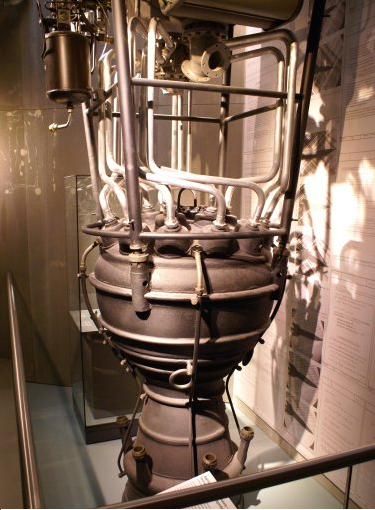
V2 Rocket Motor: - Roket yanma odası -
 |
||||

Combustion Chamber, V-2, Cutaway With a thrust of 25 metric tons (56,000 lb), the V-2 motor was the world's first large, liquid-fuel rocket engine and powered the first ballistic missile, the German V-2 of World War II. The combustion chamber was the engine's heart and burned the propellants, water alcohol and liquid oxygen, at about 2,700 ºC (4,900 ºF). Water alcohol was injected through six pipes near the bottom of the chamber, moved up between the walls in order to cool the chamber, emerging through the sides of the 18 injectors on top. Small pipes also injected alcohol into the chamber through rings of tiny holes in order to provide a insulating film of fuel along the walls. Liquid oxygen was injected directly into the top of the injector heads. A pyrotechnic igniter started combustion, after which burning was self-sustaining. Materials: Country of Origin: Germany Dimensions:
Turbopump, V-2, Cutaway
|
||||
 |
||||
 |

 |
|||
|
Hiçbir yazı/ resim izinsiz olarak kullanılamaz!! Telif hakları uyarınca bu bir suçtur..! Tüm hakları Çetin BAL' a aittir. Kaynak gösterilmek şartıyla siteden alıntı yapılabilir. © 1998 Cetin BAL - GSM:+90 05366063183 - Turkiye / Denizli Ana Sayfa /Index /Roket bilimi / E-Mail /Astronomy/ Time Travel Technology /UFO Galerisi /UFO Technology/ |
||||