Faster Than Light Travel:– Fact or Fiction?


6/7/2012


Previously we discussed a few of the past technologies, our limitations in regards to space travel and prominent idea/theories that are being developed and tested right now. We have already discussed the Alcubierre Drive and Em Drive as those concepts are the most popular, but they are not the only the ideas that have been tested and developed. There is the Ion Drive or Ion thruster/ion propulsion, Quantum Entanglement, Wormholes and other theoretical space travel concepts that could be the future of interstellar travel.

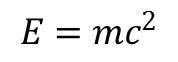
All of us have heard, at least in passing, about one or more forms of faster than light (FTL) travel, but is any form even possible? First of all lets look at why travelling faster than light causes such problems. As laid out in Albert Einstein’s theory of Special Relativity, energy and mass are equivalent. The relationship is described by perhaps the most famous equation in all of science: More properly this can be written as follows:
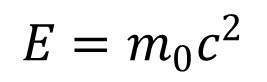
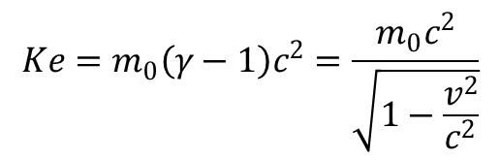


Where:


E = Energy

m0= Rest mass – The mass of the body when it has zero velocity

c = The speed of light in a vacuum

Now I can imagine the expression on your face and the thoughts running through your head: “This is all very good, but what the heck has it got to do with FTL travel?”


Well it is actually the first step in understanding why, with current knowledge, that FTL travel is impossible.
We must now look at the relationship between an object’s velocity. We can do this in one of two ways, I can spend the next page showing how to derive and then explain and reduce this equation:


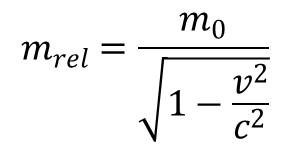
Or we can avoid the headaches (on both sides) and take my word for it that it can be rearranged and simplified to:


Where:

mrel = Relativistic mass

m0 = Rest mass

v = Velocity

c = The speed of light in a vacuum

I’ll assume that you chose option 2!


Now what does this equation show us, and what for that matter is relativistic mass?


Relativistic mass is the mass of an object when it is moving with a certain velocity v. This may seem very strange, but this equation actually reveals that the faster an object is moving the more massive it becomes. Which means you ‘weigh’ more sprinting in a race than you do sitting still watching the TV! The next question is of course, why does no one notice they become more massive as they increase their velocity? The simple answer is that for the sort of speeds we deal with in everyday life the increase in mass is very, very small indeed. Let’s look at an example:


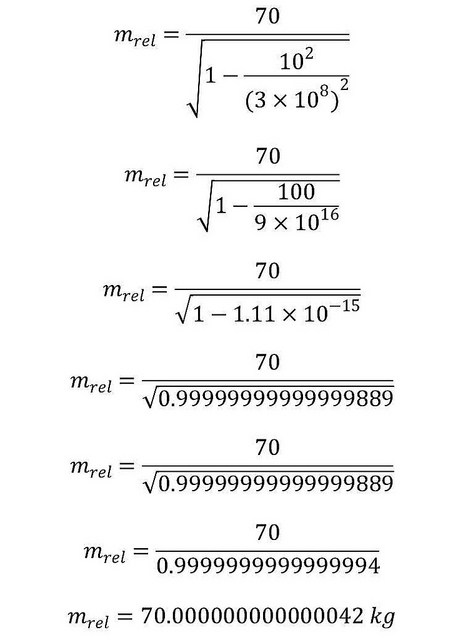
If we imagine a man who has a rest mass of 70kg; he decides to go for a run and moves with a velocity of 10ms-1 (which is just slightly slower than Olympic Gold Medallist Usain Bolt), what is his relativistic mass?


All that needs to be done is a simple substitution and then solving, which looks something like:


Now I think you can see why no one notices the increase!


In fact in all but a few practical examples the change in mass is so tiny that it can simply be ignored. Though travelling faster than light (or even close to it) is a situation where this increase becomes a real problem.


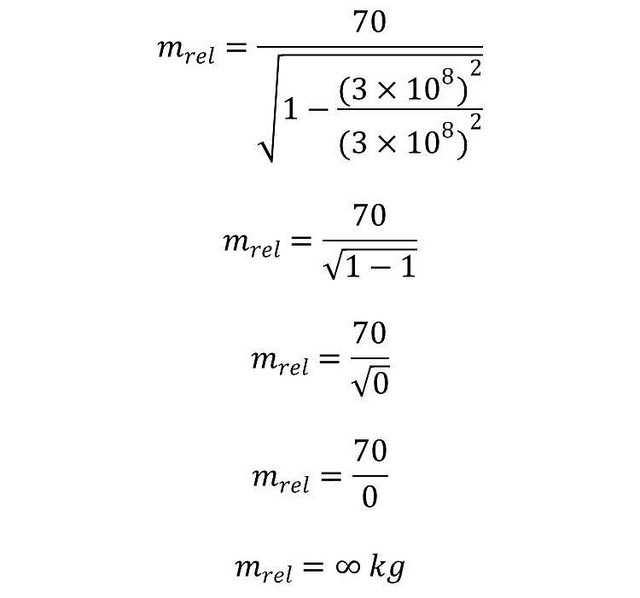
Lets try the equation again, abandoning all reason, and sending the man on the run of his life at the same velocity as light – c – and watch what happens (those of you who are used to formulae such as these may well already see the problem):


Oh dear we seem to have broken the calculator!


With an infinite mass you require infinite kinetic energy to reach the speed of light (from K.e. = 1/2mv2) and for obvious reasons this can never be obtained. It doesn’t matter if you are a nearly massless neutrino (even though they almost manage to reach it) or a multimegaton Star Destroyer, nothing you do will ever provide enough energy to reach, never mind exceed the speed of light.


That is of course unless you find a way to avoid the problem.


Many Sci-fi programs, books, games and movies all use FTL travel in one form or another. In terms of their story lines of civilisations spread out over many star systems it is a practical narrative necessity. Their are lists of Sci-fi FTL travel methods as long as your arm, many of which are as outlandish as they are impossible but are their any out their that can claim to have the tiniest grip on possibility?
Lets take a look at a selection of methods:

The most common FTL method used in science fiction and the most familiar to most of us is the hyperdrive (a.k.a. Warp drive). This method ‘works’ by generating a field or bubble around the ship, this then allows the ship to shift from normal space to ‘hyper or sub’ space. Here we are informed the normal laws of physics that prevents a ship from travelling faster than the speed of light do not apply, thus the ship can travel at FTL speeds without suffering the effects of


a) Mass increase (which we have already discussed)
b) Time dilation
c) Lorentz contractions
d) Inertia
e) A multitude of other phenomena that would make writing scriptsplots very inconvenient.


While in theory, this could be possible if such alternate versions of space exist, it is currently impossible to create a field that allows this shift or event or even to prove that subhyperspace even exists. So for the moment at least we are a long way from flying round the galaxies with hyperdrive enabled ships. The method works essentially by ‘cheating’ – by taking the user outside the normal laws that govern the way the Universe works, so unfortunately the chance of such a mode of FTL travel seems most unlikely and will probably remain a writer’s ‘get out of jail free’ card.


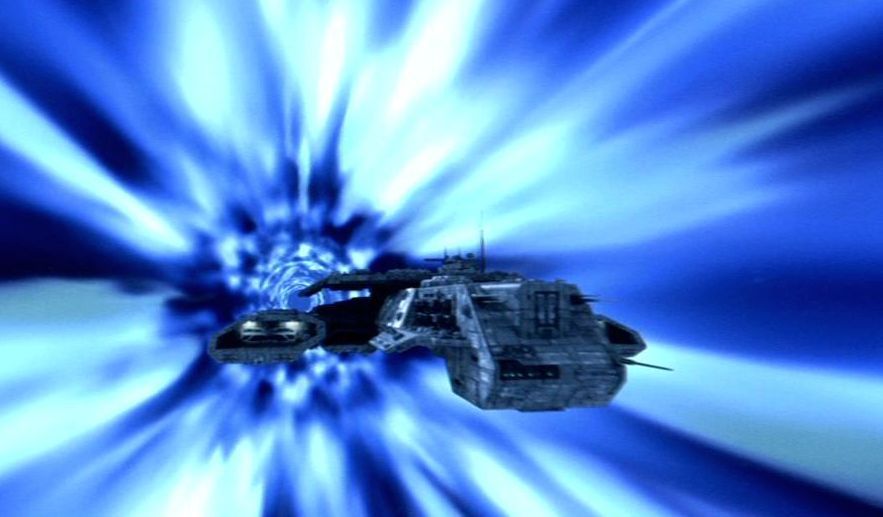
The Deadelus using its hyperdrive Credit: MGM/Stargate Atlantis


Another more obscure form is the use of a mass lowering field (brought forward to the public by the “Mass Effect” trilogy of games). This concept is based on the principal that an object with a lower mass requires less effort and energy to accelerate it.The principal while again possible in theory does have several problems: –

1.We don’t have anything able to lower the mass of another object.

2.Though even if we did for this idea to work the field would have to be very powerful to reduce the mass of the ship to zero and this would no doubt need a massive power source.


So this is another method that will probably be confined to science fiction as once again it requires that we ‘cheat’ past some of the universal laws.


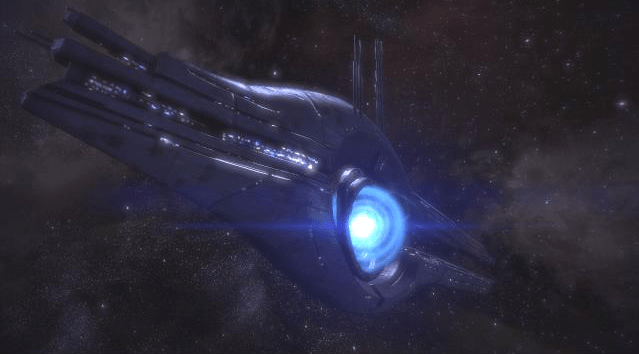
A Mass Relay Credit: BiowareMass Effect

Yet another method of FTL travel is the wormhole (also known as Einstein-Rosen bridges). This has been used in several sci-fi television programs and movies such as “Stargate” and “Star Trek”. This unlike the previous two methods may actually be attainable rather ‘easily’ (relatively speaking – ha ha) without having to defy or escape the laws of physics. Wormholes can in theory exist and are even predicted to exist in Einstein’s theory of relativity; space and time are woven together like a fabric, a large enough mass -like a star- bends space and time. If the mass is large enough it can create a sort of tunnel connecting two parts of space potentially very far apart. As wormholes are by far the most likely method of FTL travel to exist in reality I will go into some detail on them.


A wormhole is in basic terms a ‘rift’ in the fabric of space-time. Such a rift would connect two points in space and time, while the points in theory could be at opposite ends of the universe. As such a traveller using such a tunnel could cross large expanses in the universe in a short time as the tunnel itself could be very short despite the potentially monumental distances between the entrance and exit of the wormhole itself.

This would allow the user to cross vast regions of space in a time that would indicate an apparent speed much greater than the speed of light. The speed limit has not been breached however as the wormhole has simply created a shortcut through space-time.  This means that whilst a vast distance has been moved through ‘normal space’ nothing has passed through the wormhole faster than the speed of light and thus no physical laws have been broken. How is this possible you ask? To explain a wormhole imagine you are a worm on the surface of an apple, you want to get from one side of the apple to the other. You have two choices: you can take the long way round the surface of the apple or tunnel through it giving you a much shorter distance to travel.


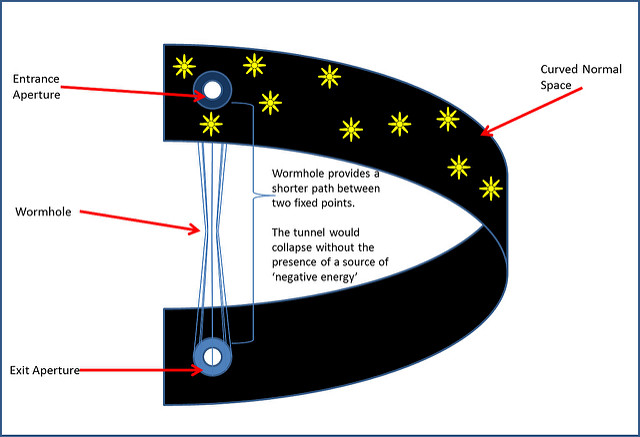
A diagrammatic description of a Wormhole Credit: Peter Clark

Wormholes are thought to exist all around us at the quantum level. As such they are much smaller than the diameter of even a single atom and so completely impractical for use, what’s more such wormholes are very unstable existing only for tiny fractions of a second. Current theory suggests that it may, in the near future, be possible to expand such wormholes, to a size large enough for a person or even a starship to pass through potentially allowing us to manipulate space at will. With the potential to provide, fast efficient interstellar, perhaps even intergalactic travel possible.

Despite their lure, as is often the case, there are several issues with wormholes three of which I will deal with now. Two of which are comparatively simple whilst the second requires deeper thought.


Wormhole are thought to exist as point-to-point structures, this means that a wormhole would allow you to travel from point A to point B but not allow you to stop anywhere along the way. This also means that a wormhole can’t be used to connect more than two places. Imagine a tunnel connecting one side of a large mountain range to another after the tunnel has been excavated it can’t be moved to another part of the range – it goes from one place on one side to one place on the side, nowhere else.

Wormholes can link two points at different times as well as different points in space, which at first glance may appear to offer a way of time travel. A person entering one end of the wormhole could emerge at the other side at a point in time before they had entered the wormhole itself.

This may seem counter intuitive, however nothing in the laws of Physics prevent it. As a result of having a fabric of space-time a person or object could in principle travel through time as well as space. While this sounds enticing, it is here we encounter our third problem with wormholes – feedback.


Similar to acoustic feedback in sound systems, a wormhole linking two points in time could suffer a build-up of repeating cycles of radiation and energy becoming trapped within the tunnel. Unable to escape, this build-up of energy would continue to grow, destabilising the wormhole as it does so. Eventually the build-up would cause the wormhole to collapse in on itself after a short period.


Clearly, the problems with wormhole travel are primarily the expansion and stabilisation of the tunnels themselves however in the future it may be possible to solve or mitigate these problems and so provide us with a practical method of achieving superluminal velocities.


An artist’s impression of Wormhole travel Credit: NASA

There is one other small ‘hitch’ with this idea however as currently not one wormhole has ever been detected, due in no small part to their tiny size, even compared to other subatomic structures. Even if one was detected, its destination could not be determined until something passed through. In addition, the destination would be fixed and unable to be controlled offering a strict point-to-point travel system. Making their use limited until a way or artificially producing them was devised.
A recent paper by V. Dzhunushaliev, V. Folomeev, B. Kleihaus and J. Kunz suggests that ‘wormhole stars’ may be exist. That is a pair of stars linked together by a pair of wormholes at their cores. Furthermore, they predict that the wormholes would be fairly stable over longer time scales as a constant flow of material back and forward across the wormhole could potentially keep it open and prevent its collapse. Perhaps even more exciting is the possibility of the detection of such stars via monitoring their pulsations, which are expected to follow a different pattern compared to other known variable stars. Others have been quick to point out that pinning down variability to the presence of a wormhole would be exceptionally difficult and that the wormholes themselves would serve no practical purpose.


To conclude, wormholes are physically possible in fact probable, and offer a plausible method of travelling vast distances through space, despite the problems the use of such objects currently face.

All of the above methods are either pure fiction or not possible with current technology and at this time, however, here is an interesting case for your thought. As we all know, each star as viewed from Earth rotates around the sky once every twenty four hours. This would seem to show that each star is moving at many times the speed of light as they would be travelling massive distances in a single night. This however is a matter or perspective, the Earth is rotating on its axis and it is this rotation that gives the illusion that the stars are moving impossibly fast when in fact they are not.

Unfortunately as I have said FTL travel is currently impossible and fantastical ideas such as the hyperdrive will likely forever be confined to science fiction but maybe one day we will take the first step out into the big universe using some form of FTL travel perhaps even falling through a wormhole, you never know...

                                                                                                                                                                                                            
© Çetin BAL - GSM:+90 05366063183 -Turkey / Denizli

                                                                 © 1998 - GSM:+90  05366063183 -


  • UFO Teknolojisi
  • Gravity - Antigravity
  • Bilimsel Makaleler
 
DOSYALAR.. 
  • Montauk Project
 

belgeler

  • QUANTUM HYSICS
  • UFO GALERY
  • ASTRONOMY
  • Yıldız Geçidi (Stargate )
  • Genel görelilikte ikizler paradoksu
 

Dosyalar...

  • UFO TECHNOLOGY - 13 
  • BOB LAZAR -  AREA S4
  • CAN GRAVITY BE AN ELECTROSTATIC FORCE?
  • SPACE-TIME  ENGINEERING 
  • WARP DRIVE - WORMHHOLE -TIME TRAVEL
 
DOSYALAR..
  • RAINBOW PROJECT
  • GENEL GÖRELİLİK KURAMI
  • BİRLEŞİK ALAN TEORİSİ
  • UFO TYPE (UFO TİPLERİ)
  • ZAMAN YOLCUĞU KURAMIM
  • TIME TRAVEL RESEARCH 
  • JOHN R.R.  SEARL DISK 
  • UFO AREA S4
  • AGARTA UZAY GEMİLERİ TEKNOLOJİSİ
  • ANDROMEDSA UZAY GEMİLERİ
  • UFO GRAVITY MANIPULATION
  • RELATIVITY FILE
  • GRAVITY PROPULSION
  • ELEMENT 115
  • DİĞER SAYFALAR... Syf:1
  • ANASAYFA..
  • DÖRDÜNCÜ BOYUT
  • IŞIK HIZININ ALTERNATİFİ KURTDELİKLERİ
  • ESİR ETHER TEOREMİ 
  • UFO FILES: ALIEN ENGINEERING  (UFO DOSYASI: UZAYLI MÜHENDİSLER)
  • STARGATE ATLANTIS
  • EVRENİN SIRLARI